Birdsong
Registered by goatgrrl of New Westminster, British Columbia Canada on 4/23/2004
 This Book is Currently in the Wild!
This Book is Currently in the Wild!
12 journalers for this copy...

 This is the story of Stephen Wraysford, a young Englishman who in 1910 goes to Picardy, France, to learn the textile business. While there, he falls deeply in love with the young wife of his host. Several years later, at the outbreak of WWI, Stephen once again finds himself in Picardy, this time as a soldier. He struggles through the bloody battles of the Marne, Verdun, and the Somme (in which thirty thousand British soldiers were killed in the first half hour alone), camps in the vermin-infested trenches, and hunkers in underground tunnels where he watches many of his friends die. In spite of everything, Stephen manages to find hope and meaning in his life, and in the world. Birdsong leaves the reader with images of life and war that are graphic and unforgettable (particularly memorable: the scene in which the contemporary -- 1970s -- character begins to comprehend the enormity of the sacrifice of human life during WWI). This book, along with Timothy Findley's The Wars, is the best novel on WWI I have read.
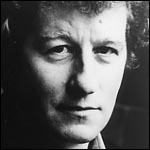
 Sebastian Faulks' first novel, A Trick of Light, was published in 1984. It was followed by The Girl at the Lion d'Or in 1989, and A Fool's Alphabet in 1992. In 1993 he published Birdsong to huge critical acclaim. Faulks (left) was named Author of the Year in the British Book Awards of 1995. You can read an article on Faulks' work on the BBC World Service's website here.
INTERNATIONAL BOOKRAY
1. This is an international bookray -- if you join, please be willing to ship anywhere.
2. Please journal the book when you receive it, and again when you mail it out -- that way, everyone will know the book's approximate location.
3. If you don't think you'll be able to read this book within a reasonable time of receipt, please let me know before it's sent to you by the previous reader, and I will be happy to move your name further down the list.
4. Whether you have read the book or not, please do not keep it longer than eight weeks.
Participants:
1. itsmejudy - Mt. Evelyn, Victoria, Australia - rec'd June 23, 04.
2. tantan - Gympie, Queensland, Australia - rec'd August 4, 04; mailed August 27, 04.
3. Ada2 - North Avoca, New South Wales, Australia - rec'd September 2, 04; mailed September 27, 04.
4. deadsteen - Cortlandt Manor, New York, USA - rec'd October 13, 04; mailed October 30, 04.
5. jenvince - Sherman Oaks, California, USA - rec'd November 13, 04; mailed December 6, 04.
6. morpha - Astoria, Oregon, USA - rec'd December 18, 04; mailed late December.
7. dododumpling - St Neot's, Cambridgeshire, UK - rec'd February 1, 05; mailed February 16, 2005.
8. madhamster - Derby, England, UK - rec'd February 18, 05; mailed April 29, 04.
9. Mymlan - Helsinki, Finland - rec'd May 3, 05.
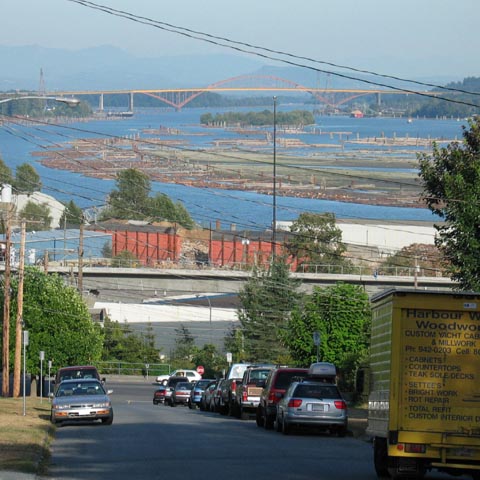 Birdsong will be leaving New Westminster, British Columbia en route to itsmejudy in Mt Evelyn, Australia on April 26, 2004. Photo at left is the Fraser River, as seen from the top of my street in New Westminster.

I received this book in today's mail! Typically I received another bookring yesterday, if it doesn't rain it pours. I am however up to date with my bookcrossing reading, apart from one or two rabcks so I don't see a problem in getting this one read and out within two weeks, three at the most.
I have never read any Sebastian Faulks but had a quick look through the book and am really looking forward to reading it.
Will journal again when I've finished.
I have never read any Sebastian Faulks but had a quick look through the book and am really looking forward to reading it.
Will journal again when I've finished.

Received in the mail today! I'm currently reading a BC ray book, and I have three rings to go after that, so this one will be after that. I'm reading as fast as I can, but as usual all the BC books arrived at once! :-)
I really enjoyed this, if that is the right word to describe it. I felt a little like the 1970's character Elizabeth in this book - it takes something like a read like this to make us realise the huge sacrifice that took place World War I, and all the other wars of history. The descriptions in the story made me uncomfortable at times, but that is nothing compared to what the real-life suffering would have been. Definitely an eye-opening read.

 This arrived in the mail today. Like everyone else on this ring it seems I have another bookring book in front of it, but I will get to it promptly. Very much looking forward to reading it - never encountered this author before. Thanks goatgrrl and tan tan....
 Just an update: been a bit slow with this because of a few unexpected things in life. Almost finished, so I'll be sending it on by the end of the week. Sorry to slow the ring down!
 Have sent this on to deadsteen (september 27th by economy airmail). Will journal tomorrow.
 This was a book well worth reading in many respects. It certainly gives an uncompromising insight into the experiences of soldiers during the World War1 conflict and the types of incredible horrors that they lived through. One particularly gruelling moment was in the hospital with the boy who had been burned in the fire: the reader feels the boy's experience, as well as that of Stephen and the other soldiers nearby, and the nurse and then the doctor. Beautifully written and heart-wrenching scene. I think this World War1 component is the book's real strength.
The love stories didn't work so well for me. I'm not sure whether it's because they're a bit of a disappointment all round, or because communication between the central characters never properly gets opened up, or because the 'happy' endings all seem a bit of a compromise - anyway, they were all a bit unsatisfying for me - which could say more about me than the book! On the other hand, the relationships between the soldiers - the friendships between men in battle, worked very well.
I also felt that the book laboured its points many many times - that it was sometimes over-written. The imagery of war, of the horrors of trench warfare, the isolation and emotional and physical deprivation, the fears, the comradeship, the deep dark of the night in the fields of battle - all these elements were excellent, but then it went on and on - and rather than this aspect of the writing becoming relentless (which is a great device), it became tedious till I felt like saying to the writer, 'I do get it!'.
The book was obviously critically well-received: all the reviews on the cover and inside are outstanding. Maybe this sets the bar a bit too high and the reader expects too much, rather than just enter the book unencumbered. Anyway, I liked it very much, connected with the WW1 experience and was deeply touched and enriched by that, but felt finally that the human (romantic) relationships left me disappointed.
Thanks goatgrrl for the opportunity to read this. I have never read this author before, nor seen this work anywhere. Glad to have read it. M.
Has arrived!! It is up next on Mt. TBR.
Great book.... Made me think about World War I and "The Lost Generation." The first 100 pages were quite unexpected, but that only added to the book's appeal. Thanks for sharing this one... don't think I would have gotten to it otherwise.
Will send on to jenvince!
Will send on to jenvince!

This arrived yesterday. Have been looking forward to reading this one. I do have three bookrings ahead of this, but it should be no problem getting this one back on the road within a month.
Updates:
11/26 Am able to start this one today.
11/30 Am almost halfway through. Having to read this a little slower than other books, but am enjoying the story so far.
Updates:
11/26 Am able to start this one today.
11/30 Am almost halfway through. Having to read this a little slower than other books, but am enjoying the story so far.
I finally finished this up last night. I am glad I had the chance to read this. The description of the fighting...whoa. Those poor, poor guys. And the tunnels? Yikes! Very interesting story.
I will be mailing this on Monday to morpha.
I will be mailing this on Monday to morpha.

Arrived via mail a few days ago. I'm reading it already, so far, so good. I should finish before Solstice and have already PM'd the next reader on the list.
Wow! What an intense book! I am thankful that I got to read it. If it weren't for BookCrossing, I would have never heard of this book.
One of the things I appreciate the most about BXing is that I have the opportunity to read great literature that is not published (or not publicised in the USA). Thanks for making this good book available via bookring!
I feel that the 1970's part of the book was extraneous, except for the part about the arch. Imagine, an arch with thousands and thousands of names on it - all are those whose remains were never found (or identified), just from one area.
This book really brings home the true cost of war. A timeless message. Let us never forget.
The most gut-wrenching part of this gut-wrenching book was the part with the two officers and the canary in the tunnel. Just reading the passages that took place in the tunnels gave me claustrophobia and a major case of the willies.
I have a book called The Silent War. It is based upon the journal of an American soldier in the trenches in france during WWI. This book also documents the misery and horrors of this sort of war. The mud, the bodies, the rats, the bad food, and death, death, death. What was new to me in Birdsong was the tunnels, an aspect of that war that I had not previously known.
Rumsfeld should have to read this book. Still waiting to hear from the next person on the list for this ring, I'll give it until after Christmas before PMing the next person.
One of the things I appreciate the most about BXing is that I have the opportunity to read great literature that is not published (or not publicised in the USA). Thanks for making this good book available via bookring!
I feel that the 1970's part of the book was extraneous, except for the part about the arch. Imagine, an arch with thousands and thousands of names on it - all are those whose remains were never found (or identified), just from one area.
This book really brings home the true cost of war. A timeless message. Let us never forget.
The most gut-wrenching part of this gut-wrenching book was the part with the two officers and the canary in the tunnel. Just reading the passages that took place in the tunnels gave me claustrophobia and a major case of the willies.
I have a book called The Silent War. It is based upon the journal of an American soldier in the trenches in france during WWI. This book also documents the misery and horrors of this sort of war. The mud, the bodies, the rats, the bad food, and death, death, death. What was new to me in Birdsong was the tunnels, an aspect of that war that I had not previously known.
Rumsfeld should have to read this book. Still waiting to hear from the next person on the list for this ring, I'll give it until after Christmas before PMing the next person.

Journal Entry 16 by dododumpling from St. Neots, Cambridgeshire United Kingdom on Wednesday, February 2, 2005
Arrived yesterday - thanks very much. :) I hope to be able to make a start on it within a day or two.
Journal Entry 17 by dododumpling from St. Neots, Cambridgeshire United Kingdom on Monday, February 14, 2005
 Whew, where do I start? I think first of all I should say that I thought this was an amazing book that affected me immensely. I finished it last week but have spent a few days thinking about what I want to write in this journal entry. I’m not sure that I’ll be able to do my feelings justice, but here goes.
 I think one of the things that struck me most was that "life goes on". I’d never really thought about the logistics of the First World War but the realisation that life carried on a few miles behind the trenches surprised me for some reason. Even worse was the apparent indifference on the home front – the reactions of Weir’s family when he went home on leave was shocking, likewise the reactions of the shopkeepers to Stephen when he was on leave in London. Over the weekend I was in my favourite charity shop looking at the bookshelves and found Vera Brittain’s Testament of Youth, which I am hoping will give me further background.
The descriptions of the tunnels (about which I had no idea), the mud, the lice, the rats, the canaries, the camaraderie … all of these were, as morpha has said, were gut-wrenching. But it was often the almost incidental details which really hit me hard: The letters written home – the way the soldiers tried to reassure their wives and parents that all was well. In particular those letters written before the battle of the Somme – those men were just waiting to die. The agony and tension must have been unbearable. The fact that in the first part of the book, places which have such historical resonance – Thiepval, Somme – are mentioned in passing as ordinary places, places with nice tearooms or pretty views. You forget that these places existed before the war. The fact that an exhausted, terrified soldier could be faced with court martial for falling asleep at his post. The fact that whole communities signed up (for instance the entire Heart of Midlothian football team) and so few returned.
Here are some links which I hope will be of interest:
The Thiepval memorial arch
And another about the arch
The Battle of the Somme
A map of the Somme
Thanks for sharing this book, goatgrrl. I'm pleased to have read it.
Journal Entry 18 by dododumpling from St. Neots, Cambridgeshire United Kingdom on Thursday, February 17, 2005
Sent to madhamster in Derby on 16 February 2005 (second class post).


Arrived on Friday, thanks dododumpling. Been looking forward to reading this for ages so it won't be long till it gets sent on!

Well what can I say about this book.... well it was excellent. I'd first heard of Birdsong when I saw William Hauge reviewing it on the BBC. After studying the First World War at school I thought it might be a good read, it was more than good! I was surprised at the beginning of the book, I thought it would just jump straight to the war. However I think it was very clever the way it was structured because it makes you appreciate the madness of the war. One minute people are living normal lives, the next they are put into the most barbaric conditions man can create. If this book doesn't inspire you to make the most of the life we get to live, or put you off the war then something isn't quite right.
I studied WW1 and all its horrors at GCSE but I was also fortunate enough to go to France and Belgium for a few days to visit the battlefields and cemeteries, it is something I’d recommend to everyone. The Somme memorial has to be seen to be believed, it’s hard to understand just how many lives were wasted until you see the monument in its full glory. The size of it is just phenomenal and the numbers of soldiers with unknown graves is shocking. Ypres is also another must have visit, as they play the last post every night of the week and have done so since the early 20's. It is one of the most moving things you are likely to see. Again, just look at all the names on the Menin Gate, the sheer numbers of people who have died but also never found is incredible, entire families and in some cases towns wiped out. Finally; Vimy ridge, because of the preserved trenches that still exist is another good site to visit. It is amazing to see just how close they two sides existed at certain pints on the battle field.
But back to the book.... a great read, even if your not interested in novels based on war, it is not the fighting that is gripping in this book, but the individual struggles that get lost in the wider conflict.
I studied WW1 and all its horrors at GCSE but I was also fortunate enough to go to France and Belgium for a few days to visit the battlefields and cemeteries, it is something I’d recommend to everyone. The Somme memorial has to be seen to be believed, it’s hard to understand just how many lives were wasted until you see the monument in its full glory. The size of it is just phenomenal and the numbers of soldiers with unknown graves is shocking. Ypres is also another must have visit, as they play the last post every night of the week and have done so since the early 20's. It is one of the most moving things you are likely to see. Again, just look at all the names on the Menin Gate, the sheer numbers of people who have died but also never found is incredible, entire families and in some cases towns wiped out. Finally; Vimy ridge, because of the preserved trenches that still exist is another good site to visit. It is amazing to see just how close they two sides existed at certain pints on the battle field.
But back to the book.... a great read, even if your not interested in novels based on war, it is not the fighting that is gripping in this book, but the individual struggles that get lost in the wider conflict.
Posted to Mymlan a few days ago. Sorry its taken so long to get to you!

Thank you, the book arrived safely two days ago, and I already started reading it. I'll be back when I'm done.
I did finish the book already some time ago, but I've been slow journaling it. Thank's for sharing it, I did like reading it and don't think I would have known about it otherwise.
The beginning left me a bit cold, it was so much a pastiche of an nineteen century French novel (plus the sex scenes). The seventees didn't seem all that necessary either.
The WWI with all the mud, blood and horror was very vividly described. I just visited Ypres six months ago and was shocked by the number of the names of those just simply "missing". In the book this became very clear as well. The whole absurdity of the war was very present as well, WWI is so different from WWII because there is no noble cause behind all the killing, it's just war for the sake of war. Seen from Finland WWI also seems so distant, as we weren't involved, but the book brought it a bit closer.
The beginning left me a bit cold, it was so much a pastiche of an nineteen century French novel (plus the sex scenes). The seventees didn't seem all that necessary either.
The WWI with all the mud, blood and horror was very vividly described. I just visited Ypres six months ago and was shocked by the number of the names of those just simply "missing". In the book this became very clear as well. The whole absurdity of the war was very present as well, WWI is so different from WWII because there is no noble cause behind all the killing, it's just war for the sake of war. Seen from Finland WWI also seems so distant, as we weren't involved, but the book brought it a bit closer.
Journal Entry 24 by Mymlan at Kallion kirjasto in Helsinki, Uusimaa / Nyland Finland on Friday, June 17, 2005
Released 18 yrs ago (6/17/2005 UTC) at Kallion kirjasto in Helsinki, Uusimaa / Nyland Finland
WILD RELEASE NOTES:
RELEASE NOTES:
Goatgirrl let me relase the book, so that's what I'll do. It will be in the shelves near the entrance, on the right side with the different leaflets.
Goatgirrl let me relase the book, so that's what I'll do. It will be in the shelves near the entrance, on the right side with the different leaflets.

I caught this on my way home from work at quarter past three PM. Thanks Mymlan and Goatgrrl.
I found a Finnish copy of Birdsong. This copy is free to go.
Journal Entry 27 by dotdot at Stockmann in Helsinki, Uusimaa / Nyland Finland on Sunday, December 4, 2011
Released 12 yrs ago (12/4/2011 UTC) at Stockmann in Helsinki, Uusimaa / Nyland Finland
WILD RELEASE NOTES:
 This book is a part of my BookCrossing Advent Calendar. Every day before Christmas in December I release a book from my bookshelf. This is the fourth book and the fourth window of my 2011 Advent calendar. It can be found in Stockmann's Department Store, Helsinki Center at 3.00 pm, in a flower department.